
Introduction
A minor internal defect is all it takes to shut down an entire operation.
In industries where machinery runs under constant pressure, hidden issues inside engines, pipelines, or turbines often go unnoticed—until they turn into costly breakdowns. For maintenance teams, this means unplanned downtime, expensive repairs, and serious safety risks.
The real challenge? Most of these faults develop in areas that are impossible to inspect without dismantling the equipment. This is where high-resolution borescope cameras are transforming industrial inspection. They allow engineers to see inside critical components in real time—without opening, damaging, or stopping the system.
In this guide, you’ll learn how industrial inspection camera solutions work, where they are used, what features actually matter, and how to choose the right non-destructive testing camera for accurate, efficient, and reliable inspections.
What is a Video Borescope Camera?
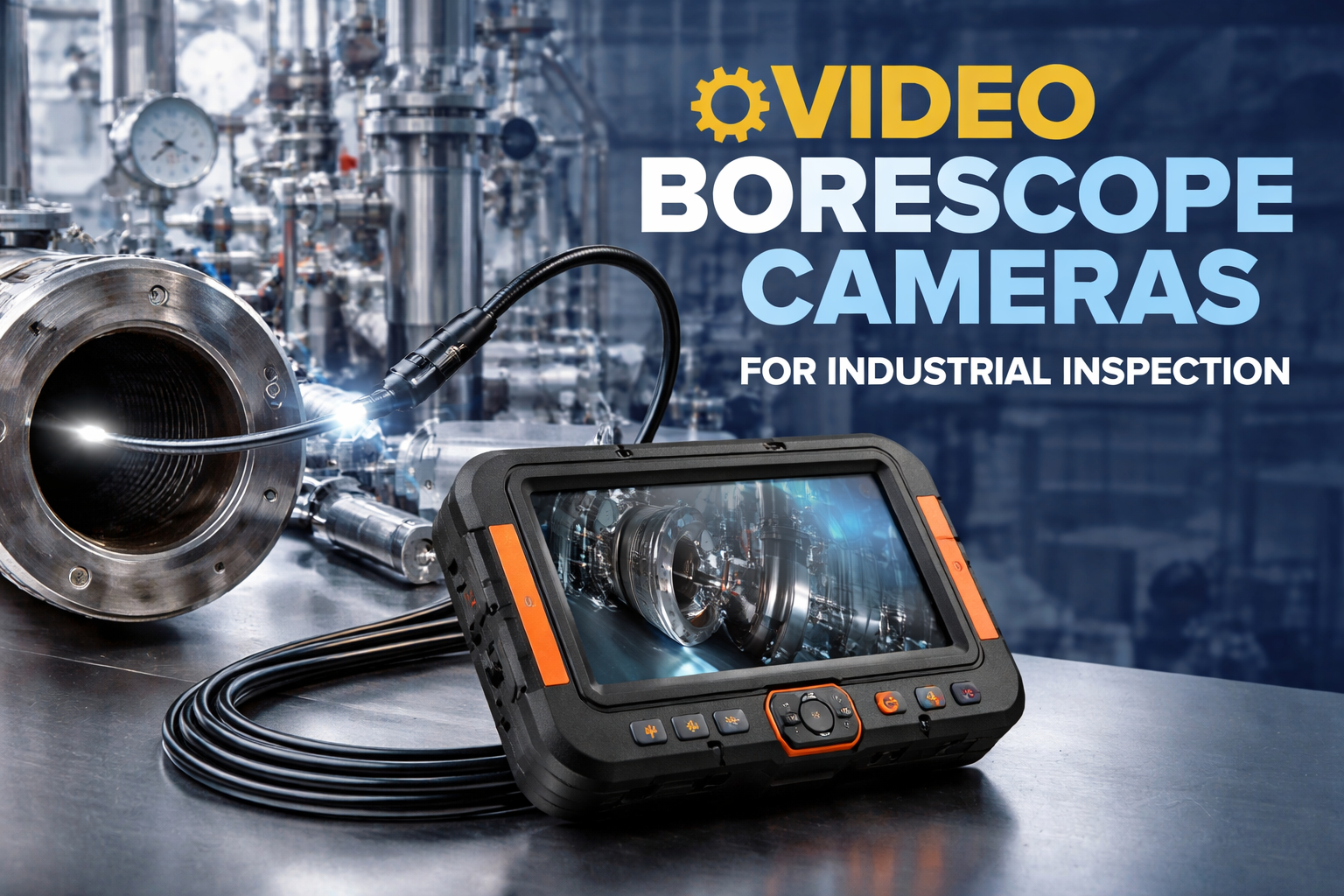
A video borescope camera is an advanced inspection camera for confined spaces that allows engineers to visually inspect internal components of machines without dismantling them.
It typically consists of:
-
A flexible or rigid probe
-
A high-resolution camera
-
Integrated LED lighting
-
A display or recording system
These devices are widely used as endoscope inspection cameras for industrial use, helping technicians detect cracks, corrosion, blockages, and wear in hard-to-reach areas.
Why Industries Use Borescope Cameras
1. Non-Destructive Testing (NDT)
A non-destructive testing camera enables engineers to inspect internal components of machinery without dismantling or damaging the equipment. This is especially critical in industries where shutdowns are costly and equipment integrity must be preserved. By using borescopes, maintenance teams can identify issues such as cracks, corrosion, blockages, or wear in real time, without interrupting operations. This approach not only protects the structure of the machine but also ensures faster and more efficient inspection processes.
2. Reduced Downtime
Unplanned downtime is one of the biggest challenges in industrial operations. Even a minor undetected fault can lead to major equipment failure and halt production. Borescope cameras allow early detection of internal defects during routine inspections, helping teams take preventive action before problems escalate. By identifying issues at an early stage, industries can schedule maintenance more effectively, avoid sudden breakdowns, and ensure continuous workflow without disruptions.
3. Cost Savings
Repairing or replacing damaged machinery can be extremely expensive, especially in sectors like oil & gas, power plants, and manufacturing. With a high-resolution borescope camera, companies can detect faults at an early stage and address them before they become critical. This reduces the need for major repairs, minimizes replacement costs, and optimizes maintenance budgets. Over time, investing in a reliable inspection camera significantly lowers overall operational expenses.
4. Improved Safety
Industrial environments often involve hazardous conditions such as high temperatures, pressure systems, confined spaces, or toxic environments. Manual inspection in such areas can pose serious risks to workers. Borescope cameras eliminate the need for direct human entry into dangerous spaces by providing remote visual access. This not only enhances worker safety but also ensures inspections can be carried out more efficiently without exposing personnel to unnecessary risks.
Key Features of High-Resolution Borescope Cameras
When selecting a high-resolution borescope camera, understanding the right features is essential to ensure accurate inspection and long-term usability in demanding industrial environments.
HD Video Quality
Modern HD video borescope systems are designed to deliver sharp, detailed visuals that allow engineers to identify even the smallest defects such as micro-cracks, corrosion, or internal wear. In real-world industrial inspections, poor image quality can lead to missed faults and incorrect assessments. High-definition imaging ensures better clarity, enabling precise diagnostics and informed maintenance decisions.
LED Illumination
A borescope camera with LED lighting plays a crucial role when inspecting dark or enclosed areas like pipelines, engines, or turbines. These environments often lack natural light, making visibility a major challenge. Adjustable LED brightness allows inspectors to clearly view internal surfaces without shadows or glare, ensuring accurate inspection even in the most confined spaces.
Flexible Probe Design
Flexible probes with articulation capabilities allow smooth navigation through complex internal structures. In industries where machinery has tight bends and narrow pathways, a rigid device may not reach critical areas. A flexible borescope enables operators to maneuver easily and inspect multiple angles, improving inspection coverage and reducing the chances of missing hidden defects.
Recording & Storage
A digital borescope with recording feature allows users to capture images and videos during inspection. This is especially useful for documentation, reporting, and future reference. Maintenance teams can analyze recorded data, share it with experts, and maintain inspection records for compliance and quality control. It also helps in tracking the progression of faults over time.
Portability
A portable inspection camera device is essential for industries that require frequent on-site inspections across different locations. Lightweight and easy-to-carry devices improve operational efficiency, allowing technicians to quickly move between inspection points. Portability also ensures faster response times during emergency maintenance situations.
Applications of Video Borescope Cameras
Video borescopes are widely used across industries where internal inspection is critical for performance, safety, and maintenance planning.
Automotive Industry
In automotive applications, borescope cameras are used to inspect internal engine components, fuel systems, and cylinders without dismantling the vehicle. This helps mechanics quickly diagnose issues such as carbon buildup, leaks, or wear, reducing repair time and improving service efficiency.
Aerospace Industry
In aerospace, precision and safety are non-negotiable. Borescopes are used to inspect aircraft engines, turbines, and structural components for cracks, fatigue, or foreign object damage. These inspections are critical for maintaining flight safety and meeting strict regulatory standards.
Oil & Gas Industry
The oil & gas sector relies heavily on inspection cameras for confined spaces such as pipelines, valves, and storage tanks. Borescope cameras help detect corrosion, blockages, or leaks in harsh environments, ensuring safe operations and preventing costly failures.
Power Plants
In power generation facilities, borescopes are used to inspect turbines, boilers, and heat exchangers. Early detection of wear or damage helps prevent unexpected shutdowns and ensures continuous energy production.
Manufacturing Units
Manufacturing industries use borescope cameras for quality control and preventive maintenance of machinery. Regular inspection helps identify internal defects early, improving production efficiency and reducing downtime.
How to Choose the Right Industrial Inspection Camera
Selecting the right industrial inspection camera solution is crucial for achieving accurate results and long-term performance. The choice should be based on the specific requirements of your inspection environment.
Probe Length & Diameter
The probe length and diameter determine how effectively the camera can access internal areas. For deep or narrow spaces, a longer and thinner probe is required. Choosing the wrong size can limit accessibility and reduce inspection efficiency.
Image Quality
High image resolution is essential for detecting fine defects that may not be visible with lower-quality cameras. A high-resolution borescope camera ensures clear visuals, allowing accurate analysis and better decision-making during maintenance.
Lighting Capability
Strong and adjustable LED lighting is critical for inspecting dark environments. Without proper illumination, even high-resolution cameras may fail to capture clear images. Good lighting ensures consistent visibility across different inspection conditions.
Durability
Industrial environments can be harsh, involving heat, moisture, dust, and rough handling. A reliable inspection camera should be built with durable materials and protective features to withstand such conditions and deliver consistent performance over time.
Recording & Connectivity
Modern inspection processes require proper documentation and data sharing. A digital borescope with recording feature allows users to store inspection data and transfer it easily for analysis, reporting, or collaboration with teams.
Why Choose DEVESH MEDITECH for Borescope Cameras
Choosing a reliable manufacturer is just as important as selecting the right device.
At DEVESH MEDITECH, we provide advanced industrial inspection camera solutions designed for accuracy, durability, and performance. Our products are built to meet the demands of real-world industrial environments, ensuring consistent inspection results and long-term reliability.
We focus on:
-
High-quality imaging technology
-
Durable and ergonomic designs
-
Reliable performance in critical applications
-
Dedicated customer support
Conclusion
In modern industrial environments, inspection accuracy directly impacts operational efficiency, equipment reliability, and workplace safety. A high-resolution borescope camera Devesh Meditech is no longer just an optional tool—it has become a critical requirement for effective maintenance, quality control, and fault detection.
Traditional inspection methods often fail to identify hidden issues until they become serious problems. By using advanced industrial inspection camera solutions, maintenance teams can detect internal defects early, prevent unexpected failures, and ensure smooth operations across systems. This proactive approach not only improves performance but also extends the lifespan of expensive machinery.
FAQs
1. What is a borescope camera used for?
A borescope camera is used to inspect internal parts of machinery, pipelines, and equipment without dismantling them.
2. How does an industrial inspection camera work?
It uses a probe with a camera and LED light to capture real-time visuals inside confined or hard-to-reach spaces.
3. Which industries use video borescopes?
Industries like automotive, aerospace, oil & gas, power generation, and manufacturing widely use them.
4. What is the benefit of a digital borescope with recording feature?
It allows users to capture and store inspection data for analysis, reporting, and future reference.